
How Long Does It Take to Sell a Home in Dallas?
In Dallas, many homes are currently taking about 45 to 60 days to go under contract, but the real answer depends on price, condition, neighborhood, buyer demand, and how well the home is positioned from day one.
Recent market data shows Dallas homes selling in roughly this range. Redfin reported that homes in the city of Dallas sold after an average of 48 days on market over the three months ending April 2026, compared with 42 days the year before. Dallas County homes averaged 41 days on market, while the broader Dallas-Fort Worth-Arlington metro showed a median of 46 days on market in April 2026 according to FRED’s housing inventory data.
For sellers, that means a well-priced, well-prepared Dallas home may attract serious buyer activity in the first few weeks. A home that is overpriced, difficult to show, or not presented well may sit much longer.
The Typical Timeline to Sell a Dallas Home
Selling a home is not just the time it spends active on the MLS. The full timeline usually includes preparation before listing, time on market, contract negotiations, the option period, appraisal, financing, title work, and closing.
A realistic Dallas seller timeline often looks like this:
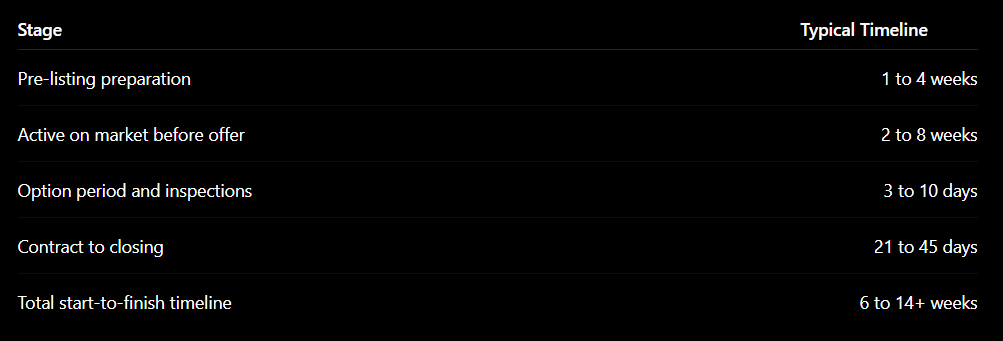
Some homes sell faster. A move-in-ready Lakewood home, a well-priced M Streets cottage, or a polished Lake Highlands property may receive strong interest quickly if inventory is limited in that specific price point. Other homes, especially those needing updates or priced above buyer expectations, may take longer.
What “Days on Market” Really Means
Days on market usually refers to the number of days a home is listed before it goes under contract. It does not include the time needed to prepare the home before listing or the time between contract and closing.
That distinction matters. A Dallas seller may hear that homes are selling in about 45 to 60 days and assume the entire process is complete in that window. In reality, if a home takes 48 days to receive an acceptable offer and then closes 30 days later, the seller is looking at closer to 11 weeks from listing to funding.
This is why it is smart to work backward from your ideal move date, especially if you are also buying another home, relocating, downsizing, or coordinating school calendars.
Why Some Dallas Homes Sell Faster Than Others
The Dallas market is not one-size-fits-all. Two homes can be less than a mile apart and have very different timelines.
A home is more likely to sell quickly when it is priced accurately, professionally prepared, easy to show, marketed well, and located in a neighborhood where buyer demand is strong for that specific style and price range.
In Lakewood, buyers often respond quickly to homes with architectural charm, thoughtful updates, good natural light, and proximity to White Rock Lake or Lakewood Elementary. In the M Streets, presentation and curb appeal matter because buyers are often comparing similar historic homes within a tight geographic area. In Lake Highlands, floor plan, school pattern, updates, and value relative to nearby Richardson ISD or Dallas ISD options can shape buyer urgency.
In Highland Park, University Park, Preston Hollow, Bluffview, and Devonshire, the timeline may vary more by price point. Luxury buyers often move carefully, but a property that is rare, beautifully presented, and properly priced can still create urgency.
Pricing Is the Biggest Factor in How Fast a Home Sells
The first two weeks on the market are critical. That is when a new listing receives the most attention from active buyers and agents. If the price is too high, the home may generate showings but not offers. If buyers feel the home does not match the asking price, they may wait for a reduction rather than engage.
Current Dallas data also suggests buyers are more selective than they were during the fastest pandemic-era market. Realtor.com reported Dallas County as a buyer’s market in March 2026, with median days on market at 47 days. That does not mean every seller is at a disadvantage. It means pricing, presentation, and negotiation strategy matter more.
In practical terms, a seller who prices based on where the market is today usually has a better chance of selling faster than a seller who prices based on a neighbor’s peak-market sale from two years ago.
Condition and Presentation Can Shorten the Timeline
Dallas buyers notice condition quickly. Many are already dealing with higher monthly payments, insurance costs, property taxes, and renovation expenses. If a home looks like it needs significant work, buyers may either discount their offer or skip it altogether.
This does not mean every seller should remodel before listing. It means the home should be presented strategically. Fresh paint, clean landscaping, professional cleaning, minor repairs, lighting, decluttering, and smart staging can make a meaningful difference.
Older homes in Lakewood, East Dallas, the M Streets, Forest Hills, Casa Linda, and Lake Highlands may also benefit from pre-listing preparation that addresses common buyer concerns, such as foundation movement, roof age, plumbing, drainage, electrical updates, or HVAC condition.
Seasonality Matters in Dallas
Dallas real estate activity often picks up in spring and early summer, especially for family buyers who want to move before the school year begins. Homes listed in late winter or spring may benefit from a larger buyer pool, while late summer and holiday-season listings can require more strategic pricing and marketing.
That said, serious buyers exist year-round. A relocation buyer moving to Dallas for work, a downsizer leaving a larger Preston Hollow home, or a buyer trying to get into Lakewood or the Park Cities may be active regardless of season.
The best listing timing depends on the home, not just the calendar.
Price Point Changes the Timeline
A $650,000 home in Lake Highlands and a $3.5 million home in Preston Hollow may not have the same buyer pool or timeline. Entry and mid-luxury homes often attract more active buyers because more households can qualify at those price points. Higher-end properties may take longer because the buyer pool is smaller and more selective.
In luxury Dallas neighborhoods, sellers should focus less on average days on market and more on whether the home is positioned correctly against direct competition. A luxury buyer may take longer to decide, but they still recognize a compelling property when pricing, condition, architecture, lot, and location align.
The Contract Period Adds Time After You Accept an Offer
After a seller accepts an offer, the home still has to get through inspection, option period, appraisal, buyer financing, title work, final walk-through, signing, and funding.
Many financed purchases close in roughly 30 to 45 days, although cash purchases can close faster and more complex transactions can take longer. Appraisal issues, lender delays, repair negotiations, title concerns, HOA documents, and buyer financing conditions can all affect timing.
This is why the strongest offer is not always the highest offer. A buyer with strong financing, clean terms, reasonable deadlines, and a clear path to closing may be more valuable than a slightly higher offer with more uncertainty.
How to Sell Faster Without Leaving Money on the Table
The goal is not simply to sell fast. The goal is to sell well.
A rushed sale with weak preparation or poor pricing can cost the seller money. A strategic sale creates the right conditions for buyers to act confidently. That starts with a pricing plan based on current comparable sales, competing listings, neighborhood demand, buyer feedback, and the home’s condition.
Professional photography, thoughtful staging, strong listing copy, neighborhood-specific marketing, private agent outreach, and showing access also matter. In Dallas neighborhoods where buyers are comparing homes closely, small presentation details can influence whether a home gets an offer in the first week or sits through multiple price reductions.
What If My Dallas Home Has Been Sitting?
If a home has been on the market longer than expected, the issue usually falls into one of four categories: price, condition, exposure, or access.
The most common issue is price. Buyers may like the home but feel the value does not match the asking price. Condition can also be a problem if buyers see too many future costs. Limited showing availability can reduce momentum. Weak marketing may fail to communicate what makes the home special.
The solution should be specific, not reactive. Before reducing the price, sellers should look carefully at showing activity, buyer feedback, competing listings, recent pending sales, online engagement, and any objections that keep repeating.
Dallas Neighborhood Examples
A well-prepared Lakewood home near White Rock Lake with updated interiors and strong curb appeal may move quickly if it is priced in line with recent sales.
An M Streets Tudor or cottage may attract strong interest when it combines character with practical updates buyers care about, such as kitchen, bath, roof, HVAC, or foundation improvements.
A Lake Highlands home may depend heavily on school pattern, floor plan, updates, and how it compares with other homes at the same price point.
A Preston Hollow or Bluffview estate may require a more tailored marketing timeline because the buyer pool is smaller and expectations are higher.
A Devonshire or Park Cities property may sell quickly if it offers the right combination of location, design, lot quality, and pricing, but buyers at these price points still expect excellent presentation.
Why Work with Mysti Stewart and the Mysti Stewart Group?
How long it takes to sell a Dallas home depends on more than market averages. It depends on neighborhood knowledge, pricing judgment, preparation strategy, marketing quality, and negotiation skill.
Mysti Stewart and the Mysti Stewart Group help Dallas sellers understand what is happening in their specific neighborhood and price point, not just the broader market. Their experience across Lakewood, East Dallas, the M Streets, Lake Highlands, Highland Park, University Park, Preston Hollow, Devonshire, Bluffview, Forest Hills, Casa Linda, and nearby Dallas neighborhoods gives sellers a clearer picture of what buyers expect and how to position a home for the strongest result.
From pre-listing preparation to offer strategy and closing, the goal is to help sellers move with confidence, avoid preventable delays, and protect their net.
Final Thoughts
Most Dallas sellers should plan for a home-selling timeline of 6 to 14+ weeks from preparation to closing, depending on the property and market conditions. The active days on market may be closer to 45 to 60 days, but the full process includes preparation before listing and contract-to-closing time after an offer is accepted.
The homes that sell fastest are usually not lucky. They are priced correctly, prepared thoughtfully, marketed well, and easy for buyers to understand. In a more selective Dallas market, strategy matters from the very beginning.
FAQs
How long does it usually take to sell a house in Dallas?
Recent data shows Dallas homes taking around 48 days on market on average, while broader Dallas-Fort Worth-Arlington median days on market was 46 days in April 2026. The full process from preparation to closing often takes 6 to 14+ weeks.
Is Dallas a fast market for sellers right now?
Dallas is more balanced than the extremely fast market of a few years ago. Some homes still sell quickly, especially if they are well-priced and move-in ready, but buyers are more selective and many listings need stronger pricing and presentation.
What makes a Dallas home sell faster?
Accurate pricing, strong presentation, professional marketing, easy showing access, desirable location, and good condition all help. Homes that feel move-in ready or clearly priced for their condition tend to attract faster buyer response.
How long does closing take after I accept an offer?
Many financed transactions close in about 30 to 45 days, while some cash purchases can close faster. Appraisal, financing, title work, repairs, HOA documents, and buyer underwriting can affect timing.
Should I wait for spring to sell my Dallas home?
Spring can be a strong time to sell in Dallas, but it is not the only good time. The right timing depends on your home, neighborhood, price point, competition, and personal move plans. Serious buyers are active throughout the year.